
Virtual Surgical Planning and Plates for Facial Trauma
Call us now
Email Us at
Designed by Zoriox Innovation Labs ,Marketed by Graft3D Healthcare Solutions
Overview
The treatment of complex facial bone fractures is challenging because of the three- dimensional anatomy of the craniofacial skeleton. The traditional methods involve intraoperative reduction and manual contouring of standard fixation plates. This extends the operation time, enhances technical challenge as well as compromises anatomical reconstruction. The adoption of Virtual Surgical Planning (VSP) and 3D printing in maxillofacial trauma care has changed the modality of patient management.
Virtual Surgical Planning in Management of Facial Trauma
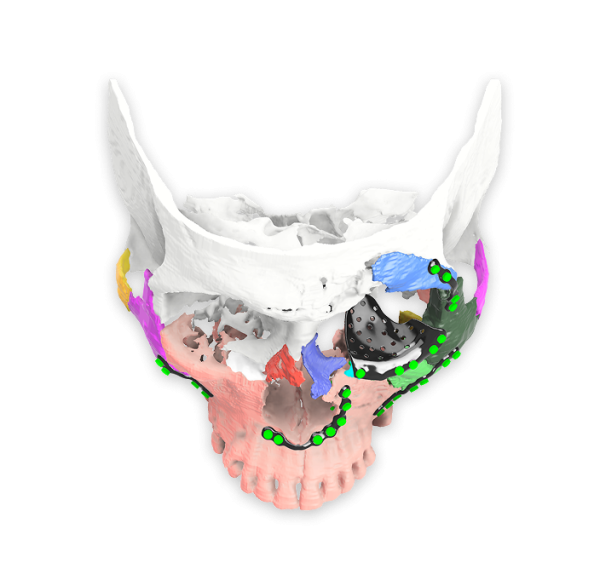
High-resolution CT based virtual surgical planning enables the reconstruction of fractured fragments in exceptional quality.
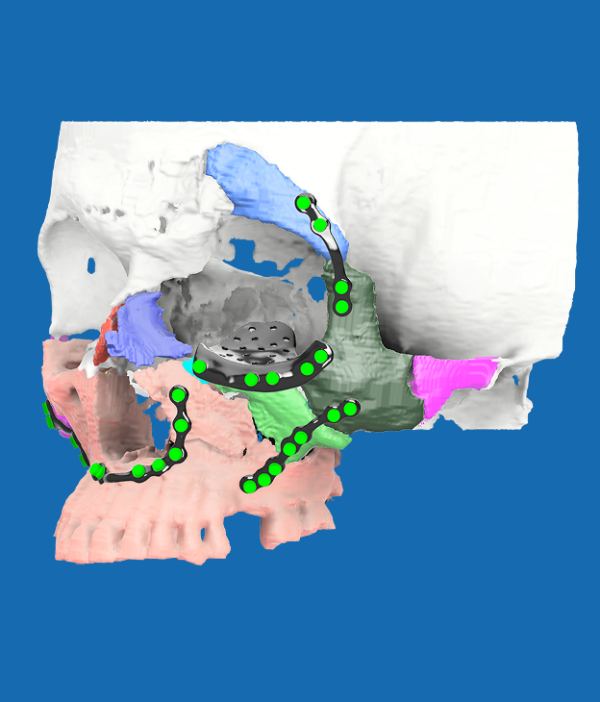
Surgeons are able to virtually reconstruct and manipulate bone fragments to subtitle millimeter precision, thereby producing a very accurate surgical template.
This digitalized technique can reduce on-site guess work and increase preoperative understanding of the expected outcome.
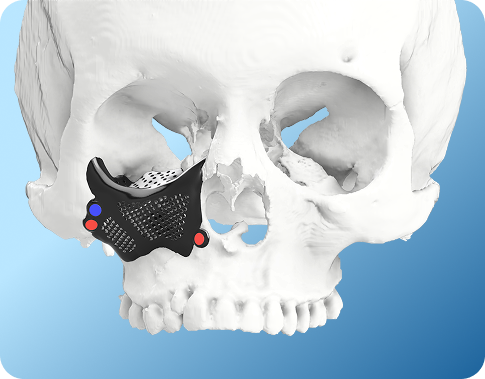
Patient Specific Implants such as individual titanium plates and meshes are fabricated according to the virtual planning case.
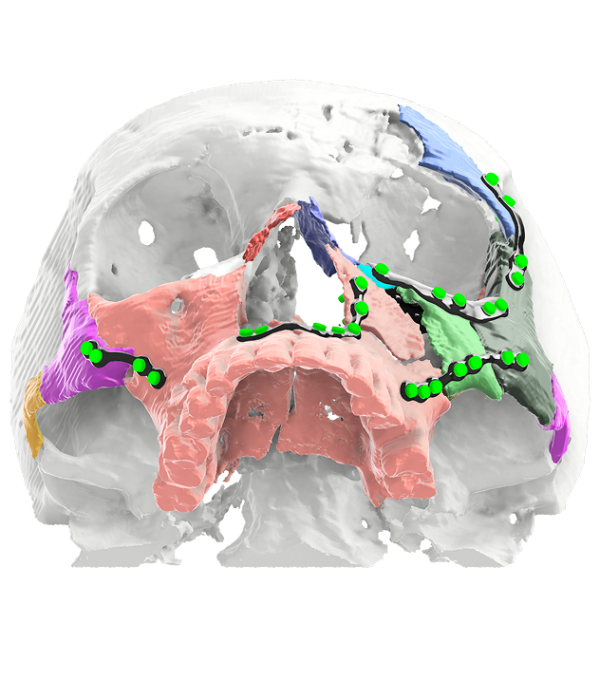
Advantages of Virtual Surgical Planning and 3D-Printed Implants
Accuracy:
Sub-millimeter restoration of the facial anatomy.
Efficiency:
Reduced surgical time by avoiding intraoperative plate contouring.
Predictability:
Enhanced control through digital preoperative planning.
Improved Outcomes:
Customized fixation plates provide long term stability, reduced complications, and better functional and aesthetic results.
Clinical Applications of Virtual Surgical Planning and 3D-Printed Implants
Reconstruction of the orbital fracture (Orbital wall and rim fractures):
3D-printed titanium plates completely reconstruct orbital structure with low risk of diplopia, enophthalmos & loss of vision.
Treatment of Zygomaticomaxillary Complex Fractures (ZMC fractures):
Patient-specific titanium implants (PSI) restores midfacial projection, contour and symmetry. Digital preoperative planning aids in better positioning of the zygoma and maxilla than freehand techniques.
Fixation of Mandibular Fractures:
Customized 3D printed titanium plates improve stability of the bone, occlusal alignment and jaw mobility.
Panfacial trauma reconstruction:
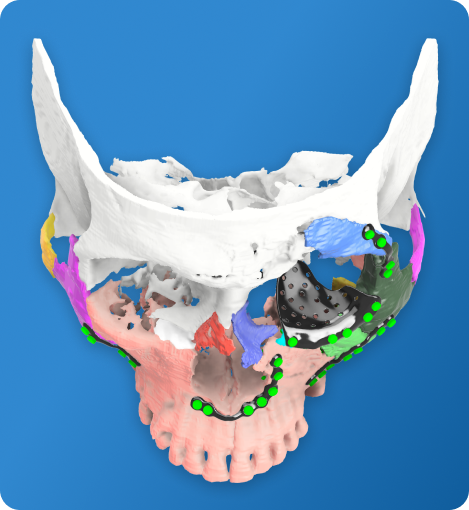
In the cases of multiple lesions,3D imaging and use of patient-specific titanium plates and meshes revises craniofacial symmetry, simplifies operation and reduces the complications.
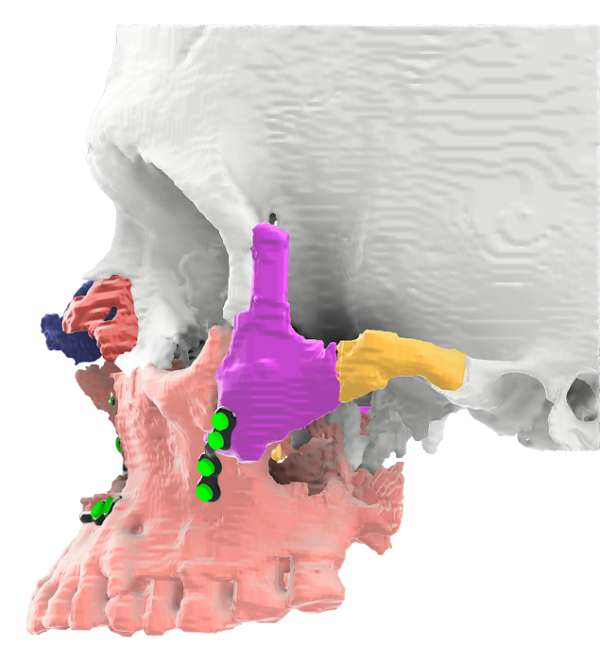
The combination of Virtual Surgical Planning with 3D-printed titanium implants has surpassed a new standard in the treatment of facial bone reconstruction. Through integration of advanced digital imaging and surgical planning with patient-specific implants, peak accuracy, efficiency and predictability can be attained during the reconstruction of craniofacial trauma.
FAQs
Contact Us & Get details for