Overview

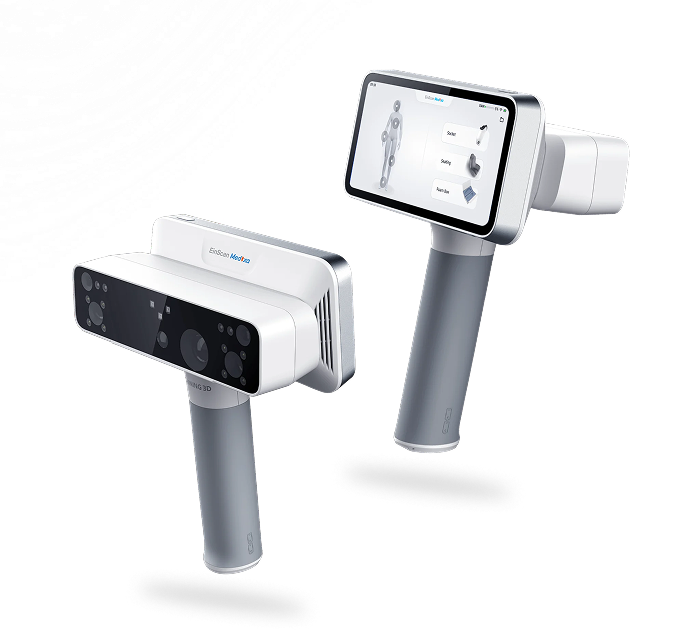
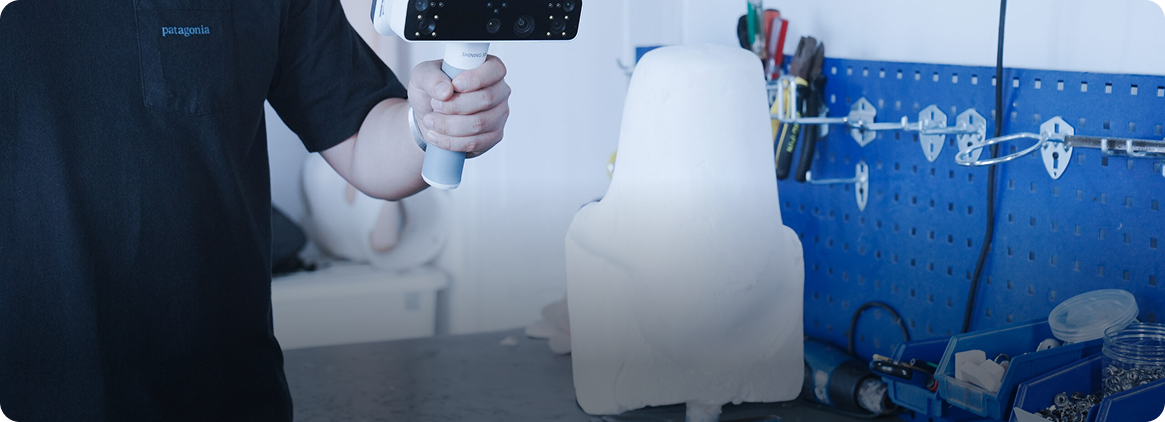
EinScan Medixa is a next generation, all in one handheld medical 3D scanner developed for highly accurate and efficient analysis of patient anatomy to the highest level of clinical comfort.
Specifically designed for orthotics and prosthetics (O&P) applications, it integrates scanning, data processing, and export functions into a standalone system, without the need for an external computer.

Core Features

Dual Light Source Technology

Utilizes both white light and infrared VCSEL illumination for assessing various skin tones and surface types.

Motion Compensation

Real time correction algorithm reduces artifacts caused by minor patient movements.

High Resolution Texture Capture

5 MP RGB camera ensures precise surface detailing for visualization, simulation, and clinical documentation.

Automatic Alignment Modes

Offers feature, texture, and marker alignment for reliable data registration.

Contact Free Scanning

Provides a hygienic, non invasive scanning experience ideal for pediatric and sensitive applications.

Preset Clinical Modes

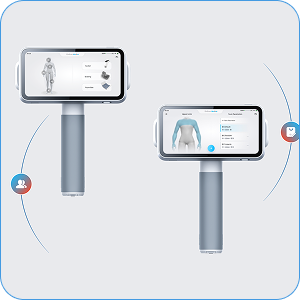
Preconfigured scanning inputs for O&P applications including face, skull, torso, upper limb, lower limb, feet and socket.

Compact & Portable

Lightweight and mobile design enables use in clinics, wards, or on site healthcare environments.

Technical Specifications

Light Source

White Light + Infrared VCSEL

Texture Camera Resolution

5 MP

Point Distance

0.2 mm to 3.0 mm (adjustable by scanning mode)

Field of View (FOV)

White Light: 475 × 360 mm | Infrared VCSEL: 1090 × 1260 mm

Alignment Modes

Feature / Texture / Hybrid / Marker / Global Marker

Scanning Modes

Face, Cranial, Torso, Upper Limb, Lower Limb, Feet, Socket

Operating Mode

Standalone system with built in computing and touchscreen interface

Output File Formats

STL, OBJ, PLY

Data Transfer

USB or Local Network

Power Supply

AC 100 – 240 V | 50–60 Hz

Operating Temperature

10 – 35 °C

Weight

Approximately < 2 kg (device only)

Workflow Integration

Scan Acquisition

Captures 3D anatomical data in less than 2 minutes per area with prospection and automatic optimization.
Data Processing

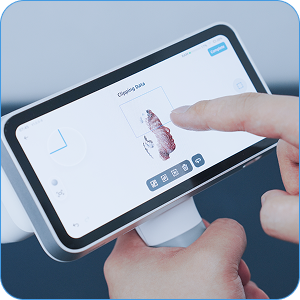
Performs mesh generation, surface smoothing, and automatic hole filling within the in built processor.
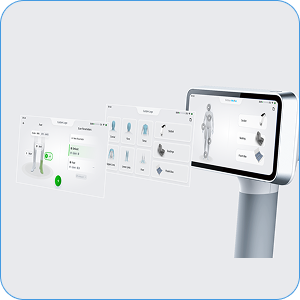
Design & Fabrication

Enables direct transfer to CAD/CAM or O&P design software for orthosis, prosthesis, and additive manufacturing processes.
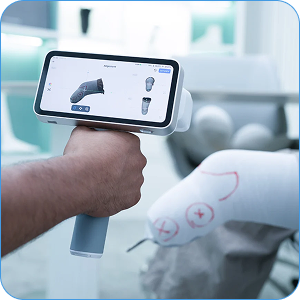
Clinical Documentation


Generates high resolution 3D records for patient tracking, fitting evaluation, and outcome analysis.

Demo Video

Clinical Applications
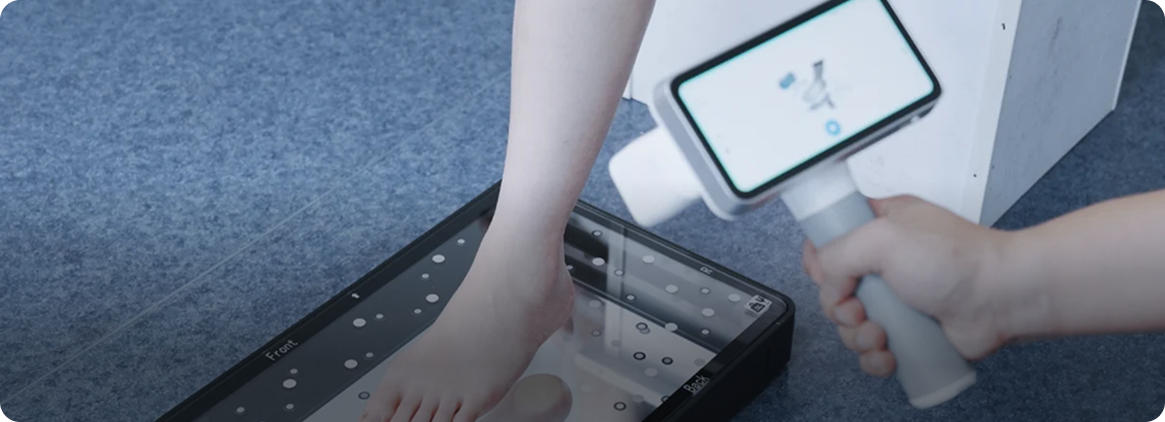
Orthotics

Design and fabrication of foot orthosis, spinal braces, seating systems, and cranial helmets.
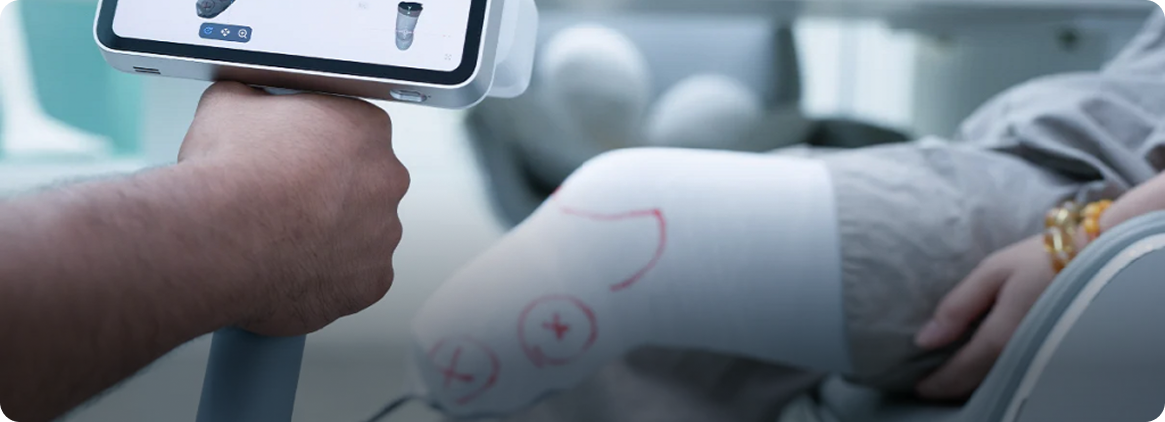
Prosthetics

Precise 3D scanning for upper and lower limb sockets, cosmetic covers, and custom interface fittings

Rehabilitation

Development of adaptive supports, mobility aids, and posture correction devices.

Maxillofacial & Cranial Reconstruction

Development of adaptive supports, mobility aids, and posture correction devices.
Clinical Research & Education

3D data capture for biomechanical studies, ergonomic assessments, and training purposes.

Advantages in Clinical Practice

Compliance & Safety

What is the einscan medixa 3d scanner used for in clinics?
The einscan medixa 3d scanner is a next-generation, all-in-one handheld system built for comfortable patient anatomy capture. It integrates scanning, processing, and export in a standalone unit, so clinics don’t need an external computer.

How does a 3D medical scanner help create outputs for care teams?
As a 3D medical scanner, it captures patient anatomy quickly and generates optimized meshes using built-in processing. The device supports clinical documentation with detailed textures, helping clinicians track fit, evaluate outcomes, and share accurate 3D records.

Why choose a 3D scanner for medical 3D printing workflows?
A 3D scanner for medical 3D printing should export common formats and fit hospital speed needs. EinScan Medixa outputs STL/OBJ/PLY and can capture an area in under two minutes, supporting faster move-to-design in clinical workflows.

What makes it a 3D scan device for anatomical modelling across skin tones?
As a 3D scan device for anatomical modelling, it uses dual light sources (white light and infrared VCSEL) to handle different skin tones and surfaces. High-resolution texture capture supports visualization, simulation, and accurate clinical documentation.

Is medical 3D scan India feasible with a portable, clinic-ready system?
Yes—medical 3D scan India becomes easier when the scanner is compact and portable. This device is designed for use in clinics, wards, or on-site environments, with contact-free scanning that supports hygienic, non-invasive patient capture.

What qualifies it as a high-accuracy 3D scanner for medical models?
It’s positioned as a high-accuracy 3D scanner for medical models through adjustable point distance (0.2 mm to 3.0 mm) and motion compensation that reduces movement artifacts. Automatic alignment modes improve reliable data registration for repeatable results.

How does 3D scanning for hospitals and clinics improve patient comfort?
3D scanning for hospitals and clinics benefits from contact-free capture, which is more hygienic and non-invasive—useful for pediatric and sensitive cases. Lightweight portability also supports scanning outside dedicated labs, reducing patient handling and wait time.

What is the patient scan to STL 3D printing workflow with this scanner?
In a patient scan to STL 3D printing workflow, you scan anatomy, let the built-in processor generate and smooth meshes with hole filling, then export STL. Files transfer via USB or local network into CAD/CAM or O&P design software.

Can it convert CT/MRI scan to 3D model directly?
To convert CT/MRI scan to 3D model, you typically need medical image segmentation software. EinScan Medixa focuses on external anatomy scanning and exports STL/OBJ/PLY, so it complements imaging workflows rather than replacing CT/MRI conversion tools.

Is it a 3D scan solution for prosthetics & implants and anatomical replicas?
Yes, it’s tailored for orthotics and prosthetics—capturing sockets, limbs, feet, and more using preset clinical modes. Fast acquisition and accurate alignment support creating 3D scanner for anatomical replicas used in design, fitting evaluation, and fabrication.