
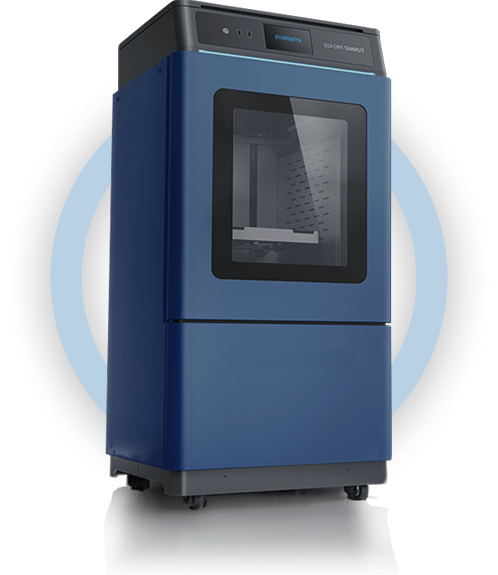
Medical 3D Printer
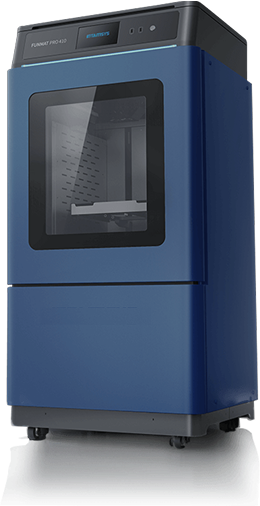
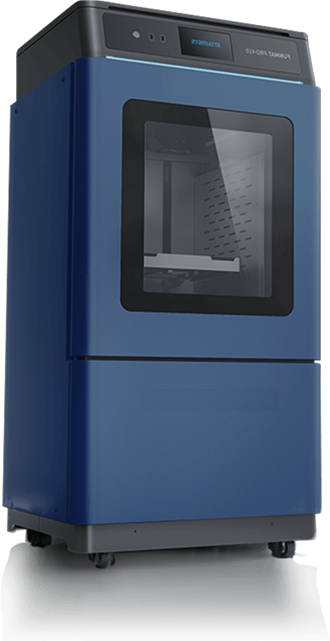
Funmat Pro 410
Self-Developed FFF (Fused Filament Fabrication) Core Technologies
Call us now
Email Us at
[email protected]Overview
At Graft 3D, we offer first-class products that utilise the latest innovative medical 3D printing technology, specifically the FUNMAT PRO 410 from Intamsys, a world-leading manufacturing company. The FUNMAT PRO 410 is a high-quality FFF (Fused Filament Fabrication) 3D printer system known for its strong performance. It offers a good build volume and excellent print quality. The FUNMAT PRO 410 is a medical-grade additive manufacturing printer engineered to meet the demanding needs of hospitals, biomedical engineers, and surgical specialists. Designed to process advanced polymers such as PEEK, PEKK, and medical-grade composites, it enables the production of patient specific implants, customized surgical instruments, and anatomical models with unmatched accuracy and safety.
By aligning with ISO 13485, FDA, and CE medical device guidelines, the FUNMAT PRO 410 empowers healthcare institutions to bring implant production closer to the point of care, reducing costs, accelerating surgical planning, and transforming patient outcomes.
Applications in Healthcare
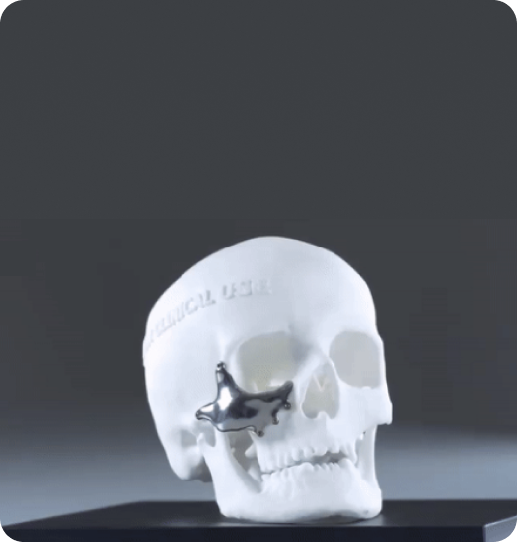
Patient Specific Implants
Print customized cranial plates, spinal cages, dental frameworks, and orthopedic implants using Medical PEEK, a biocompatible polymer with proven long term success inside the human body.
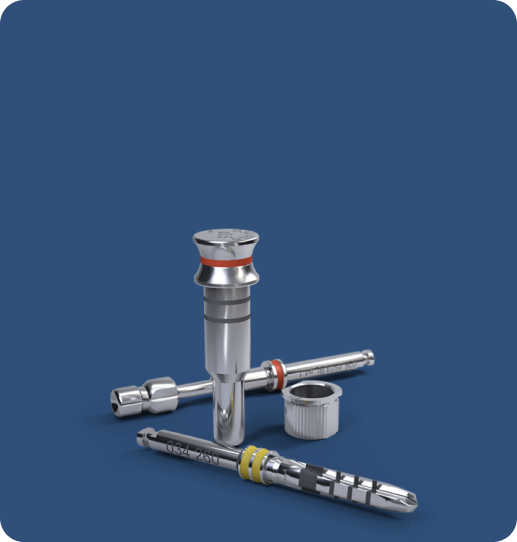
Surgical Guides & Instruments
Fabricate autoclave sterilizable guides, clamps, spacers, and tools tailored to individual surgical procedures, ensuring greater accuracy and reduced operative risk.
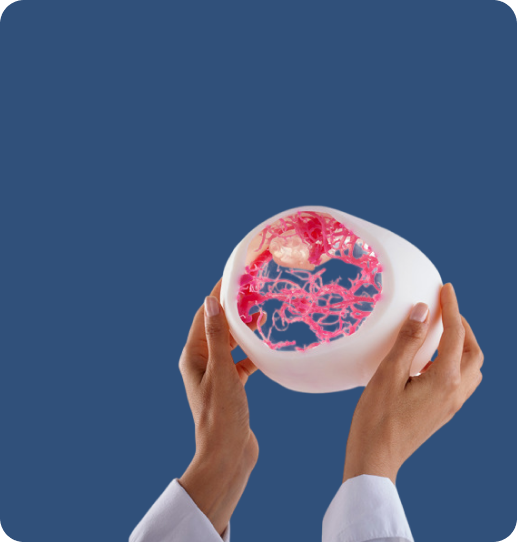
Pre-Surgical Planning Models
Create lifelike anatomical replicas based on patient scans (CT, MRI) for surgical rehearsal and education, improving precision and reducing operating room time.
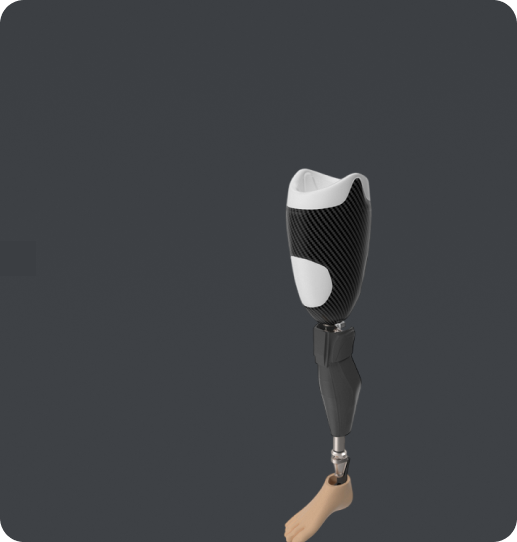
Customized Prosthetics
Design lightweight, patient-specific external prosthetics that improve comfort, mobility, and quality of life.
Technology Advantage
Designed for Medical Grade Precision

High Temperature Capability for Medical Polymers
Dual nozzles reaching 500°C, a build chamber heated up to 90°C, and a print bed up to 160°C enable stable processing of demanding biomaterials such as PEEK and PEEK-CF, ensuring mechanical performance, and biocompatibility for implant use.

Implant Grade Accuracy & Strength
The enclosed, uniformly heated chamber allows precise dimensional stability, critical when printing patient-matched implants which can affect surgical outcomes.

Dual Extrusion for Biocompatible Support Structures
Supports complex implant geometries with water-soluble support materials, leaving clean surfaces safe for patient contact without post processing damage.

Smart Monitoring & Fail safety
Integrated nozzle clog detection, filament runout sensors, humidity control, and automated leveling improve print reliability, minimizing human error and reducing waste in regulated hospital environments.

Sterilization & Compliance Focus
Printed parts are compatible with common sterilization methods such as autoclaving, gamma irradiation, and ethylene oxide, supporting safe use in surgical settings.

Compliance & Standards in Medical 3D Printing
The FUNMAT PRO 410 enables hospitals and medical manufacturers to achieve compliance with international standards for medical device production:
- ISO 13485 Ready – Supporting facilities working under certified medical device manufacturing environments.
- FDA Guidance – Suitable materials and processes for regulatory submission of additively manufactured implants.
- CE-Marking Support – Facilitates production aligned with European medical device directives.
Impact on Surgery & Patient Outcomes
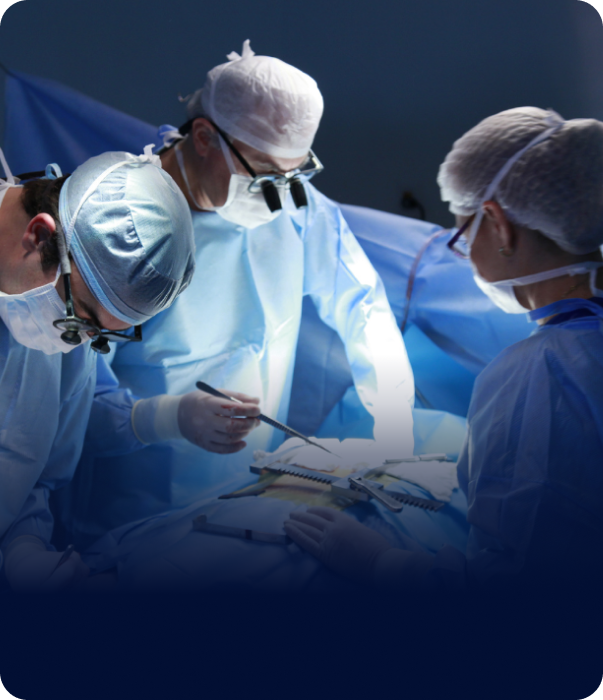
For Surgeons
- Access to ready to use implants and tools designed around patient anatomy.
- Improved surgical precision and efficiency through patient specific surgical guides.
- Reduced dependence on third party suppliers and cutting delays in critical procedures.
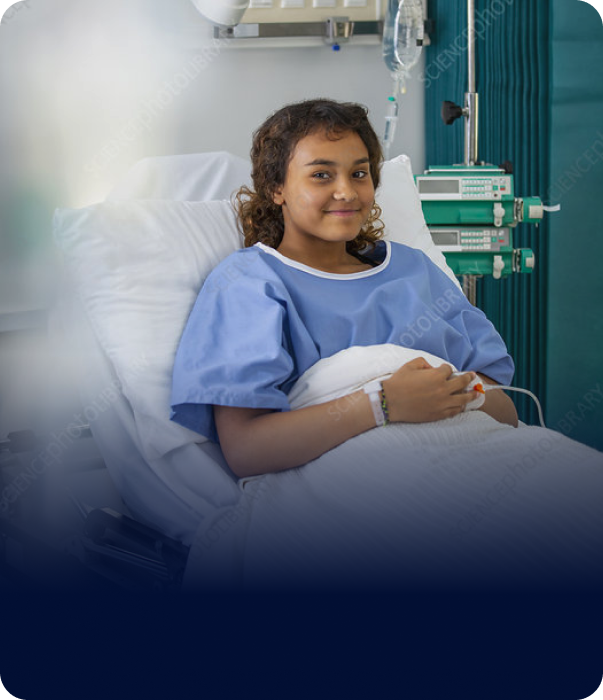
For Patients
- Faster surgical intervention by enabling on-site, hospital-based implant printing.
- Better fit and function of implants, reducing revision surgeries.
- Personalized treatment implants designed specifically for their anatomy and pathology.
Case Application
Transforming Healthcare Delivery
Orthopedic Surgery
Patient specific PEEK spinal cages printed on the FUNMAT PRO 410 have been shown to reduce operation time and accelerate recovery.
Cranial Reconstruction
Customized PEEK cranial plates deliver both cosmetic and structural benefits, with superior patient outcomes compared to traditional metal alternatives.
Dental & Maxillofacial
PEEK and PEKK implants allow lightweight, biocompatible dental frameworks resistant to fracture and corrosion.
Technical Parameters
Printing
- Technology: FFF (Fused Filament Fabrication)
- Build Volume: 305 × 305 × 406 mm (12 × 12 × 16 in)
- Layer Thickness: 0.1 – 0.5 mm
- Number of Nozzles: 2
- Filament Diameter: 1.75 mm
- Print Speed: Max. 120 mm/s
- Nozzle Diameter: Default: 0.4 mm (Optional: 0.25 / 0.6 mm)
- Leveling: Auto Leveling, Manual Leveling
- Materials: PEEK, PEEK-CF, PEEK-GF, PEKK, PPS, PC, PC-ABS, PPA-CF, PPA-GF, PA6/66, PA6-CF, PA12, PA12-CF, ABS, ASA, HIPS, SP3030, etc.
- Nozzle Temperature: Max. 500 °C (932 °F)
- Build Plate Temperature: Max. 160 °C (320 ℉)
- Chamber Temperature: Max. 90 °C (194 ℉)
- Functions: Auto-cleaning Nozzles, Filament Jam Warning, Filament Absence Warning, Remote Monitoring, Remote Printing, Printing Recovery from Power Loss

Machine
- Voltage: 200–240 V, 15 A, 50/60 Hz
- Max. Power: 3 kW
- Connectivity: WiFi, Ethernet, USB
- Screen: 7” Touch Screen
- Build Plate: Ceramics Glass Plate with Magnetic Fixations
- Build Chamber: Fully Enclosed Printing Chamber
- Motor System: High-precision Closed-loop Drive
- Cooling: Liquid Cooling System & Fan
- Travel Speed: Max. XY 300 mm/s, Max. Z 50 mm/s
- Resolution: XY: 15.6 μm; Z: 1.56 μm
- Printer Size: 728 × 684 × 1480 mm (35.0 × 34.6 × 66.5 in)
- Printer Weight: 230 kg (507 lb)
- Other Features: Overall Sealed Design, Built-in Reusable Molecular Sieve to Keep Dry, Temperature & Humidity Real-time Monitoring, Auto Filament Feeding
Safety
- Safety design: Electromagnetic Safety Door Lock, Over Temperature Protection, Overload Protection, Leakage Protection, Warning Labels
- Safety standards: EN60204 CE
- Certification: FCC, SGS

Slicing
- Slicing Software: INTAMSUITE NEO
- Supported File Types: .stl/.3mf/.obj/.x3d/.g/oltp/.stp/.step/.iges
- Operating System: Windows

Operating Environment
- Working Temperature: 15 °C ~ 30 °C (59 ℉ ~ 86 ℉)
- Working Humidity: 30 ~ 70 %
- Storage Temperature: 0 °C ~ 35 °C (32 ℉ ~ 95 ℉)
- Storage Humidity: 20 ~ 90 %

Core Functions
INTAM™ Cloud Smart Manufacturing Ecology
| Before Printing | During Printing | After Printing |
|---|---|---|
|
|
|
Why Choose the FUNMAT PRO 410 for Healthcare 3D Printing?
The Intamsys FUNMAT PRO 410 is more than just a high temperature industrial 3D printer. By combining biocompatible material support, ISO 13485 compliance, and hospital ready safety features, it empowers healthcare providers to
Produce implants and prosthetics inhouse
Streamline surgical planning and reduce operation times
Deliver personalized, cost effective, and safer patient care
Frequently Asked Questions