
Virtual Surgical Planning for Mandibular Reconstruct And Design Of Resection And Cutting Guides
In recent years, there has been a significant use of CAD-CAM technology, particularly advancements in additive manufacturing (AM), for mandibular restorations using autologous donated bone or chimeric flaps after mandibular resection. Virtual surgical planning has evolved from digital planning with cutting guides to patient-specific workflows. The latest development includes replacing stock titanium reconstructive plates with patient-specific implants (PSIs), reducing surgical duration, hospital stay, and overall recovery time while improving functional and aesthetic outcomes.
The design process for mandibular reconstructive PSIs has mostly remained focused on replicating the form and functionality of manually crafted stock titanium plates. Fibular or iliac crest free flaps are commonly used to replace the inferior mandibular edge and are then connected to other mandibular segments through PSI techniques until ossification is achieved. However, these flaps often do not meet the cross-sectional requirements needed to restore the original mandibular height.
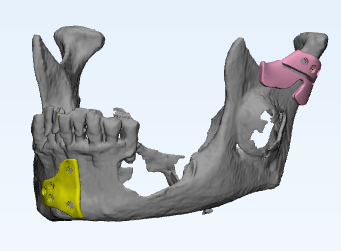
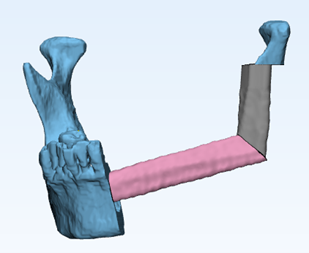
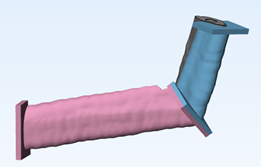
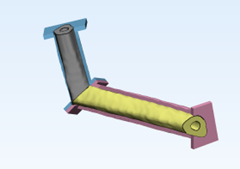
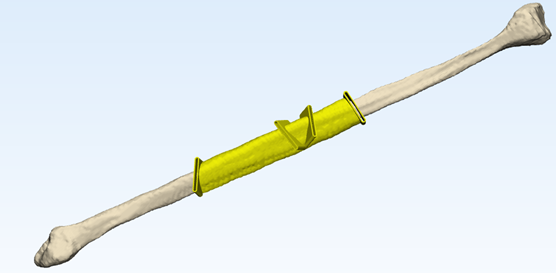
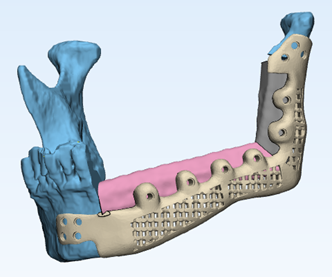
Our proposed intervention uses a fibula free flap approach and a design workflow that includes defect removal planning with resection guides (Figure 1), adaptation of fibula fragments at the defected region (Figure 2), positioning fibular segments in a craniocaudal orientation using an adaptation guide (Figure 3), a fibula cutting guide (Figure 4), and a patient-specific implant (Figure 5). This approach helps reduce biomechanical stress issues and maintains predetermined fibular alignment.
DICOM data from CT scans of the patient's head and neck, along with CT angiography of the legs, was processed in D2P and Geomagic Freeform-Plus software. These tools were used to build a virtual 3D model of patient anatomy, plan fibular free graft placement, and support precise dental implant positioning based on anticipated prosthetic rehabilitation.
You Might Also Like
Nasal ProsthesisAugust 6, 2022