- Work Hours : Mon to Sat : 09:30- 18:30
Polyetheretherketone
(PEEK)
Overview
Polyetheretherketone (PEEK) is one of the well-known members of the Polyaryletherketone (PAEK) family of molecules, characterized by outstanding mechanical and chemical properties. Used widely in medicine for orthopaedic, trauma, dental, and spinal implants because of its dependability and safety record. Its proven track record in both moulding and 3D printing ensures that highly complex, robust, and safe medical devices can be developed to improve patient outcomes and further drive medical innovation.
Key Features
- Produced with medical-grade PEEK resin and precise engineered processes to ensure absolute quality.
- Meets stringent requirements for permanent implant use.
- 3D-printed PEEK components exhibit strength and durability on par with moulded parts.
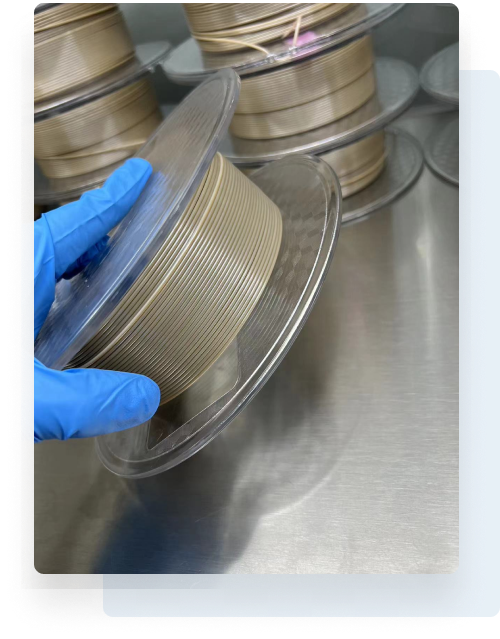
Outstanding mechanical properties
Flexural Strength
151 MPa (ASTM D790)
Flexural Modulus
3.57 GPa (ASTM D790)
Excellent chemical resistance, especially to acids.
Thermal Properties of PEEK
Displays four main thermal transitions

Glass transition
143°C

Melt temperature
343°C

Flow temperature
400°C

Recrystallization
280–320°C
Biocompatibility and Material Safety
- Produced with Biocompatible: Proven non-toxic, non-mutagenic, non-carcinogenic, and non-immunogenic through extensive testing in animal models.medical-grade PEEK resin and precise engineered processes to ensure absolute quality.
- Comparable tissue response to controls (minimal reaction, no cell lysis or adverse effects).
- Extremely low rates of allergic or inflammatory reactions, with rare reported cases linked mainly to allergies, not the material itself.
- Suitable for permanent implants, including use near sensitive tissues such as the spinal cord and nerves.
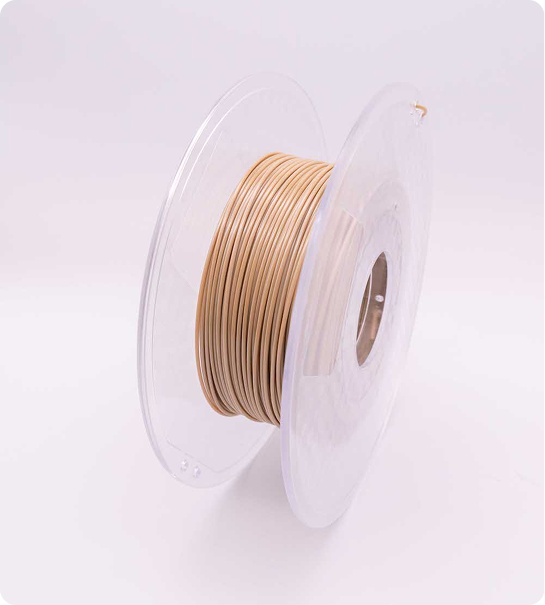
3D Printing and Material Processability
- 3D printed objects achieve mechanical properties near or equal to those produced by traditional moulding.
- Extrusion controls are vital for ensuring filament diameter and print quality.
- Optimized algorithms and control systems enhance surface quality, dimensional accuracy, and stability of medical parts.
Chemical and Environmental Resistance
- Resistant to most chemicals, particularly acids, ensuring longevity and compatibility with various sterilisation agents and clinical environments.
- Maintains structure and function after repeated steam or gamma sterilisation cycles.
- Independent studies confirm PEEK’s elastic modulus and hardness are unchanged by typical sterilisation procedures.
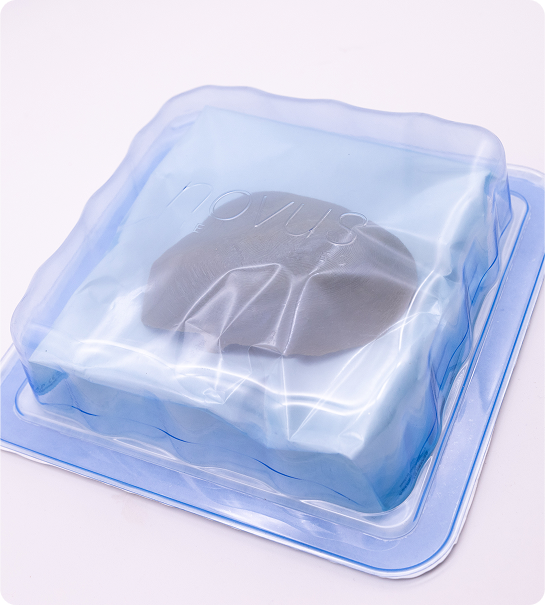
Applications
- Orthopaedics & Spinal Surgery: PEEK has superior biomechanical compatibility with bone and soft tissues.Ideal for custom interbody cages, plates, and screws.
- Dental Implants: PEEK has high resistance to mechanical and fatigue stresses in the oral cavity.
- Craniofacial Reconstruction: Enables complex, fully customized designs for maxillofacial, cranial, and orbital defects. Demonstrated success in patient cases for both functional and cosmetic outcomes.
- Medical Device Components: Surgical instruments, microfluidic devices, body fluid containers, impellers, and more.
- Cardiac Implants: Innovative heart valve frames offer improved hydrodynamics and performance.
Certifications
USP Class VI and ISO 10993:
Assures compliance with international biocompatibility standards.
Sterilisation
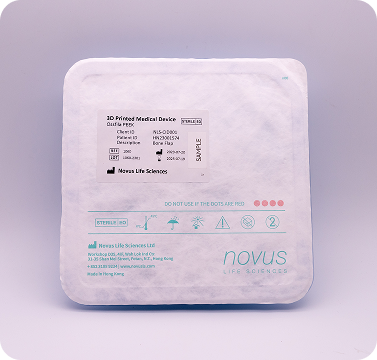
- Gamma radiation and EtO sterilisation
- Maintains mechanical integrity and performance following processing.
- Robust heat resistance ensures safety in medical sterilisation and operational settings.
- Requires controlled processing temperatures to prevent unwanted crystallization and shrinkage.
FAQs
What is Polyetheretherketone PEEK and why is it used in medical implants?
Polyetheretherketone PEEK is a high-performance polymer known for strong mechanical and chemical properties. It’s widely used for orthopaedic, trauma, dental, and spinal implants due to its dependable safety record and suitability for complex 3D printed parts.
What is PEEK filament and who should consider using it?
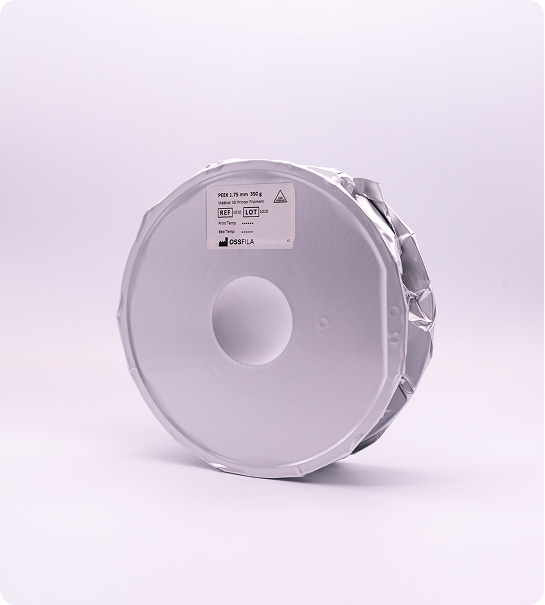
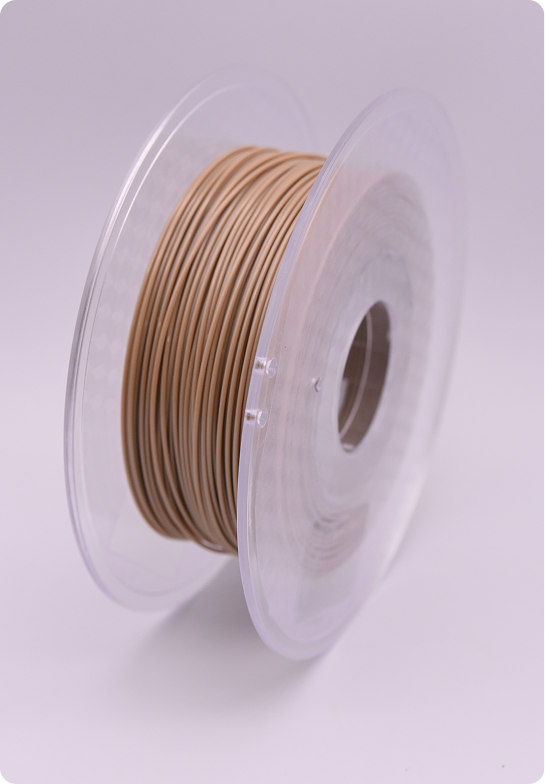
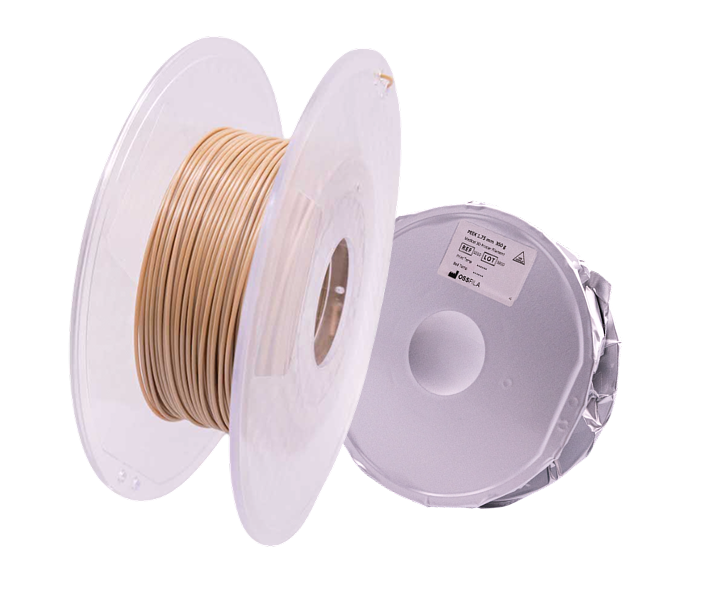
PEEK filament is a specialty thermoplastic used in high-end material extrusion printing for demanding biomedical and engineering parts. It’s best for teams with controlled printing conditions, validated workflows, and applications needing strength, chemical resistance, and stability.
What makes 3D printing PEEK material different from standard medical plastics?
3D printing PEEK material typically requires tighter process control because PEEK is engineered for high performance. It’s valued because complex geometries can be produced while maintaining robust properties that support safe, durable medical device development and innovation.
Is Polyetheretherketone 3D print India available for hospitals and manufacturers?
Polyetheretherketone 3D print India is increasingly adopted as more providers support medical-grade materials and controlled workflows. Availability depends on your required application, documentation needs, and whether your partner can manage imaging-to-design-to-print quality checks reliably.
What does medical grade PEEK 3D printing usually involve?
Medical grade PEEK 3D printing generally involves validated material handling, controlled process parameters, and quality inspection to ensure consistent output. It’s chosen when clinical teams need complex, robust device components with a proven history in implant-related applications.
Why is PEEK considered a high-temperature filament for medical implants?
PEEK is often described as a high-temperature filament for medical implants because it’s engineered for demanding thermal and chemical environments. That performance supports durable parts, but it also means printing requires specialized equipment and strict process control.
What are common examples of 3D printed PEEK implant parts?
3D printed PEEK implant parts are commonly associated with spine-related applications, prosthetics, and fixation use cases in clinical literature. The exact design depends on surgeon requirements, imaging inputs, and the manufacturing process chosen for performance and fit.
How is PEEK 3D printing for bone implants & prosthetics used in practice?
PEEK 3D printing for bone implants & prosthetics is used when teams need patient-matched geometry and strong, lightweight polymer performance. Clinical reports describe PEEK implants across areas like spine and prosthetic-related use, depending on indication and design.
What does “industrial filament for biomedical additive manufacturing” mean for PEEK?
Calling PEEK an industrial filament for biomedical additive manufacturing means it’s designed for high-demand applications where consistency, chemical resistance, and mechanical reliability matter. Success depends on validated workflows, traceability, and inspection—especially for parts intended for clinical environments.
Is biocompatible PEEK 3D printing material suitable for custom implants?
Biocompatible PEEK 3D printing material is widely discussed for implant-related use because of its established medical history and performance. Suitability for custom implants still depends on application, design validation, manufacturing controls, and meeting required clinical standards.