Polycarbonate (PC)
Call us now
Email Us at
[email protected]
Overview
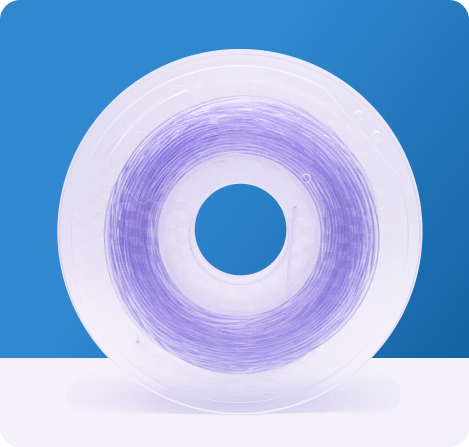
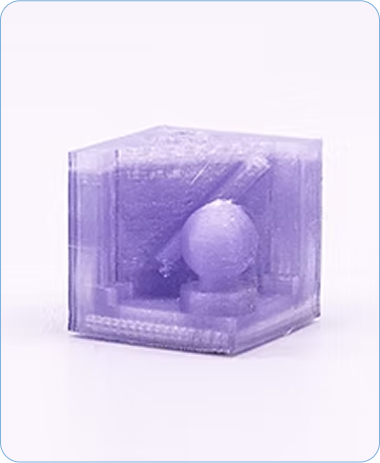
Medical Polycarbonate (PC) Filament is an advanced 3D printing material specifically engineered for the stringent standards of healthcare applications. Known for its biocompatibility, non-toxicity, and exceptional chemical resistance, it delivers superior impact resistance, rigidity, and drillability printed materials. Ideal for producing surgical guides, medical devices, and training models, Medical PC delivers both strength and reliability for critical healthcare environments.
Key
Material
Highlights
- High Optical Transparency: Polycarbonate is naturally transparent and can transmit over 90% of visible light, making it suitable for applications where clarity is essential.
- Exceptional Impact Resistance: Recognized for outstanding toughness, PC offers very high impact resistance and is virtually unbreakable under normal usage conditions.
- High Rigidity and Structural Strength: Medical PC filament exhibits high flexural strength and modulus, providing rigid, dimensionally stable parts suitable for precision medical devices.
- Excellent Chemical Resistance: Resistant to most acids and many chemicals found in laboratory and medical environments, ensuring durability and safety in challenging applications.
- Heat and UV Resistance: Maintains mechanical properties and optical clarity at elevated temperatures (up to 135–147°C) and offers good resistance to degradation from ultraviolet light.
Mechanical properties
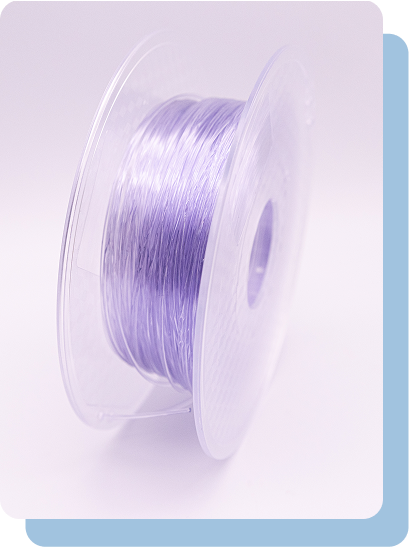
- Tensile Strength: 52 MPa
- Elongation at Break: 21%
- Flexural Strength: 82 MPa
- Flexural Modulus: 2193 MPa (2.193 GPa)
- Heat Deflection Temperature (HDT @ 66 psi): 143.7 °C
- Young’s Modulus: Approximately 2.13 to 2.25 GPa
- Impact Strength: 26.9 to 76.8 J/m
Applications
Medical PC Filament is engineered for functional, durable, and critical-use medical parts, including:
- Surgical instruments and guides
- Training and demonstration models
- Laboratory and microfluidic devices
- Fluid-handling components (body fluid containers)
- Precision machine parts (pump impellers, stirrers)
- Customized prosthetic and biomedical devices
3D Printing and
Processability

Printing Technology Compatibility
Medical PC filament is primarily used with Fused Filament Fabrication (FFF) or Fused Deposition Modeling (FDM) 3D printers, which melt and extrude the filament layer by layer to create precise, functional parts.

Printing Temperature
Optimal extrusion temperatures for medical PC filament generally range between 260°C and 310°C, allowing the filament to melt properly while maintaining strength and layer adhesion. The printer bed temperature should be set around 90°C to 110°C to reduce warping and improve adhesion.

Print Speed
Due to its high melting point and viscosity, medical PC requires moderate print speeds, typically 30–60 mm/s, to ensure consistent extrusion and reduce print defects like stringing or warping.

Warpage and Shrinkage Control
Polycarbonate has a relatively high tendency to warp due to thermal contraction during cooling. Proper bed adhesion techniques such as using heated beds, build surfaces like PEI sheets or glass, and enclosure to maintain temperature stability are recommended.

Layer Adhesion and Strength
When printed using optimized parameters, PC filament provides excellent interlayer bonding, resulting in durable, tough parts.
Sterilisation
- PC medical filament is uniquely compatible with all major sterilization techniques, including autoclaving, due to its high thermal and dimensional stability.
- Unlike lower-temperature polymers, PC retains impact resistance and optical properties even after multiple sterilization cycles.
- The ability to use multiple sterilization methods allows flexible hospital workflows and broadens the use of PC parts for implants, surgical instruments, microfluidic devices, and other clinical applications.
Certifications
The biocompatible and non-toxic formulation, certified to USP
Class VI (USP 88)